

Hey there, fellow farmers and agricultural enthusiasts! As a supplier of driven harrows, I often get asked about the noise level of these machines during operation. It's a valid concern, not just for the operator's comfort but also for the potential impact on the surrounding environment and nearby communities. So, let's dive into what you can expect in terms of noise when using a driven harrow.
First off, what exactly is a driven harrow? Well, it's a key piece of agricultural equipment used for soil cultivation. It breaks up and levels the soil, preparing it for planting. Unlike some other harrows that are pulled behind a tractor, a driven harrow is powered by the tractor's power take - off (PTO). This allows for more efficient and thorough soil tillage.
Now, let's talk about the noise. The noise level of a driven harrow during operation can vary depending on several factors. One of the main factors is the engine power of the tractor that's powering the harrow. A more powerful tractor engine is generally going to produce more noise. Also, the design and construction of the driven harrow itself play a big role. Harrows with better - engineered gears and moving parts tend to be quieter.
On average, the noise level of a driven harrow in operation can range from about 80 to 95 decibels (dB). To put that into perspective, normal conversation is around 60 dB. A lawnmower typically operates at about 90 dB. So, a driven harrow is definitely louder than normal background noise. At 80 - 95 dB, continuous exposure for long periods can start to cause hearing damage. That's why it's crucial for operators to wear proper hearing protection, like earmuffs or earplugs.
Another factor that affects the noise is the speed at which the harrow is operating. Higher speeds usually mean more noise. When the tractor is running the PTO at a faster rate to make the harrow work more quickly, the moving parts inside the harrow generate more friction and vibration, which in turn creates more noise.
The type of soil also has an impact. If you're working on hard, compacted soil, the harrow has to work harder. This extra effort can lead to increased noise levels as the tines of the harrow struggle to break through the tough soil. On the other hand, working on softer, looser soil is generally quieter because the harrow can move through it more easily.
As a supplier, we're always looking for ways to reduce the noise levels of our driven harrows. We invest in research and development to improve the design of the gears and bearings. For example, using high - quality, precision - made gears can reduce the amount of rattling and clunking that contributes to the overall noise. We also use vibration - dampening materials in the construction of the harrow to absorb some of the vibrations that cause noise.
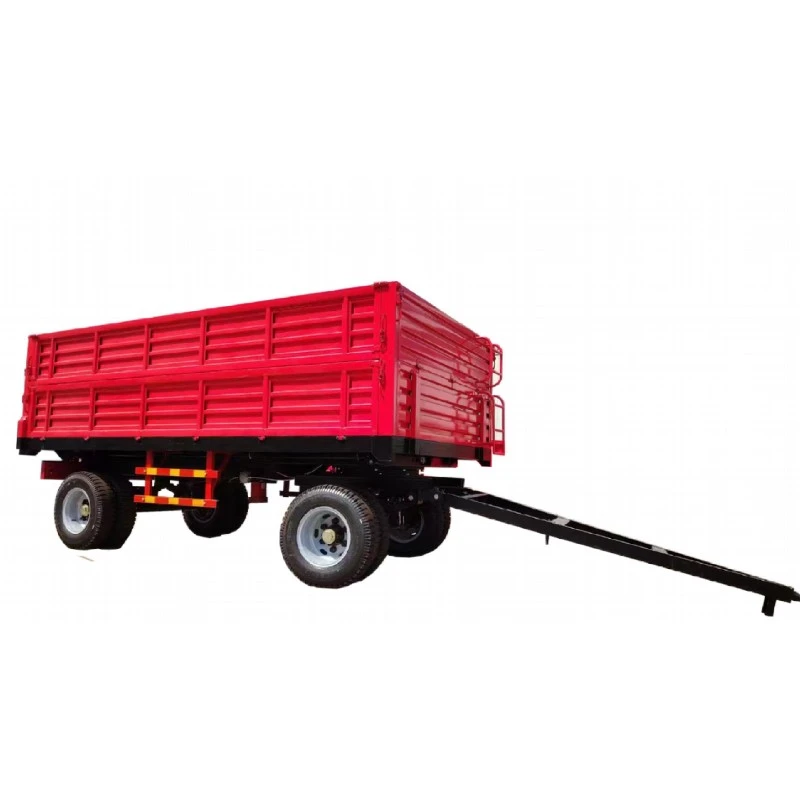
Now, you might be wondering how the noise of a driven harrow compares to other agricultural equipment. Let's take a look at some related machinery. A Double Axle Trailer is generally much quieter. Since it's mainly just a trailer being pulled behind a tractor, there aren't as many moving parts generating noise. The noise from a double - axle trailer is usually more related to the tires rolling on the ground and the occasional rattling of any cargo it's carrying.
A Front End Loader can be quite noisy, too. It has a hydraulic system that makes a lot of noise when it's lifting and moving heavy loads. The engine of the tractor powering the loader also adds to the noise. In general, a front - end loader can produce noise levels similar to or even higher than a driven harrow, especially when it's working hard to lift large amounts of material.
A Grain Seeder is relatively quieter compared to a driven harrow. It mainly has a simple mechanism for dropping seeds into the soil. There aren't as many complex moving parts as in a harrow. So, the noise it generates is usually in the range of 70 - 80 dB.

When it comes to using a driven harrow in a real - world farming scenario, it's important to be aware of your surroundings. If you're close to a residential area, the noise can be a nuisance to the neighbors. It's a good idea to plan your work schedule so that you're not operating the harrow at early morning or late evening hours when people are more likely to be disturbed.
As a supplier, we understand the importance of noise reduction not just for the operator but also for the overall farming community. That's why we're constantly striving to make our driven harrows as quiet as possible. We're always looking for new technologies and materials that can help us achieve this goal.
If you're in the market for a driven harrow, it's a good idea to ask about the noise level when you're comparing different models. Some manufacturers might have specific data on the noise output of their harrows. You can also look for reviews from other farmers who have used the harrows to get an idea of how quiet or noisy they really are.
In conclusion, while a driven harrow does produce a significant amount of noise during operation, there are ways to manage it. Wearing hearing protection, choosing the right operating speed, and considering the type of soil are all important steps. And if you're concerned about the noise impact on others, being mindful of your work schedule can make a big difference.
If you're interested in learning more about our driven harrows or have any questions about noise levels or other features, don't hesitate to reach out. We're here to help you find the best equipment for your farming needs. Whether you're a small - scale farmer or running a large agricultural operation, we've got the right driven harrow for you. Let's start a conversation and see how we can work together to make your farming more efficient and successful.
References
- Agricultural Noise and Hearing Conservation, National Institute for Occupational Safety and Health
- Handbook of Agricultural Engineering, various authors


